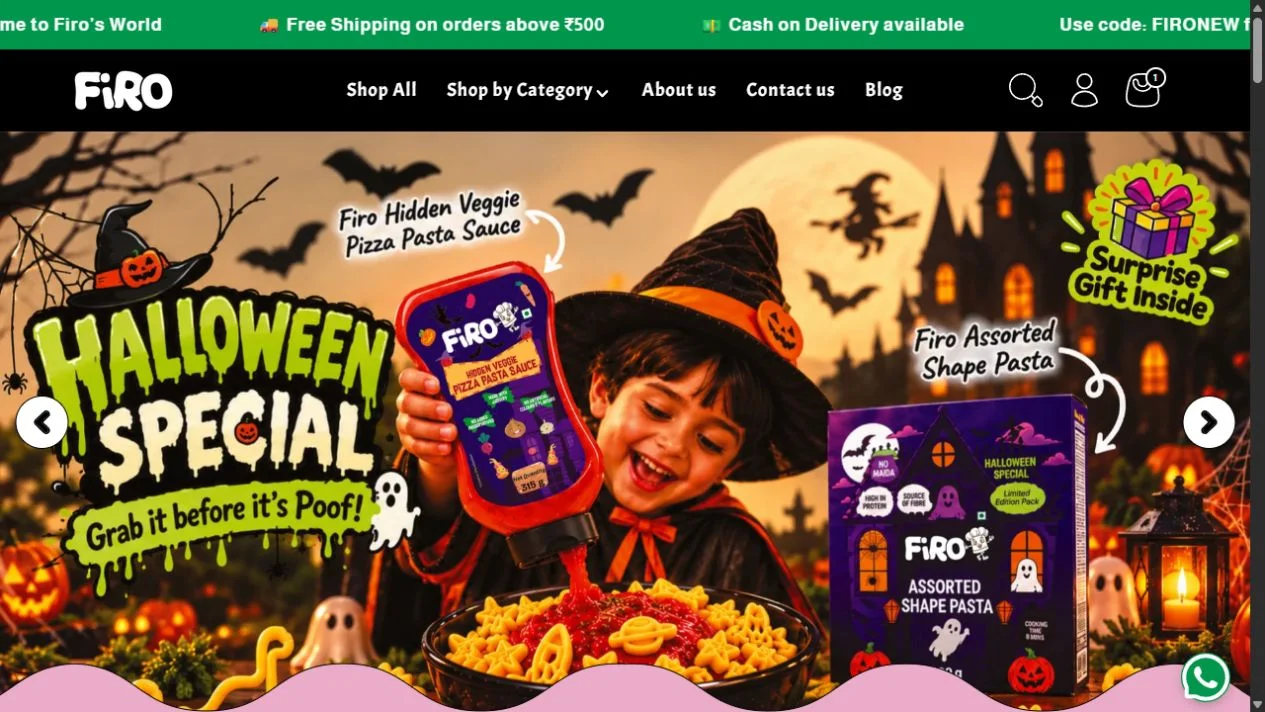
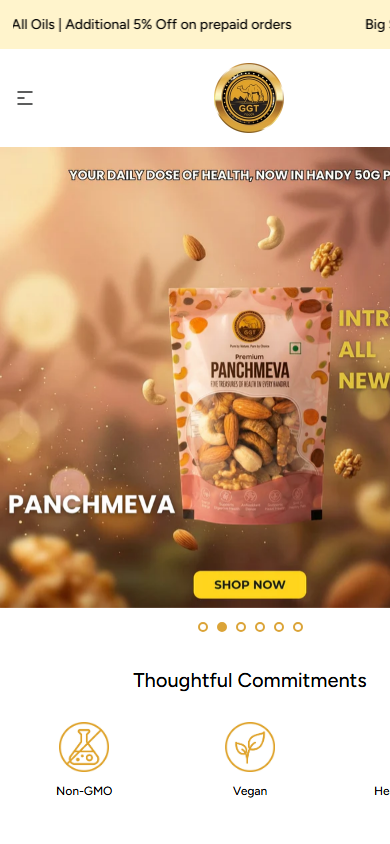
Firo Foods is an existing EHUB portfolio project. Its live storefront brings a food range into category-led browsing and a customer-facing cart. This case study reviews the published website and the practical decisions behind a comparable store brief; it does not report private customer data, order volumes or a measured sales increase.
Food catalogue and category discovery
Cart and delivery-information presentation
Shopify indicators on the public site
THE BUSINESS NEED / THE PUBLISHED DELIVERABLE
What the project puts into practice.
Public website reviewed on 28 October 2026.
Business need
A food storefront has to help shoppers browse the range, review product information and understand the next purchasing step.
Published approach
Firo Foods groups products into shopping categories and brings delivery guidance into the cart experience. Public storefront assets identify Shopify as the current platform.
Visible deliverables
Categories for pasta, sauces, nibbles and gift boxes
Product cards that show pricing and availability
A cart drawer with a PIN-code delivery-estimate entry and a route to checkout
Published result
The published Shopify storefront connects category browsing, product information and the cart, with delivery guidance available during the journey.
Questions to take into your own project
Follow a category through product selection to the cart.
Review unavailable products and customer-facing delivery information.
Agree payment, shipping and order-confirmation checks separately before launch.
The public catalogue gives pasta, sauces, nibbles and gifting their own entry points. Category choices help visitors narrow a range before evaluating an individual product. A similar food-store brief should define the catalogue hierarchy and who approves product descriptions, rather than relying on design alone to explain the offer.
02
Keep product information connected to the cart
Product cards display pricing and availability, while the cart offers delivery-estimate information and a route to checkout. These are visible interface features, not proof that a particular courier, payment integration or delivery promise works in every scenario. Acceptance should include representative products, unavailable items and supported delivery destinations.
03
Agree the operational handover
A food storefront needs clear ownership of product updates, stock, customer-facing policies and order handling. For a comparable Shopify project, document payment and shipping requirements, recurring app costs and the checks needed before launch. Review the complete shopping journey at phone size and confirm which tasks the merchant will manage after handover.
TURN THE REFERENCE INTO A BRIEF
A relevant example. Your own requirements.
Use this project to discuss presentation and customer journeys, then define the features, content and integrations your business actually needs. Compare our shopify website development scope, or explore shopify developers in delhi if you are planning with our Delhi team.
This experience review uses EHUB’s portfolio captures and available public website information. Live websites can change. No project dates, technology stack, rankings or commercial results are inferred from screenshots.