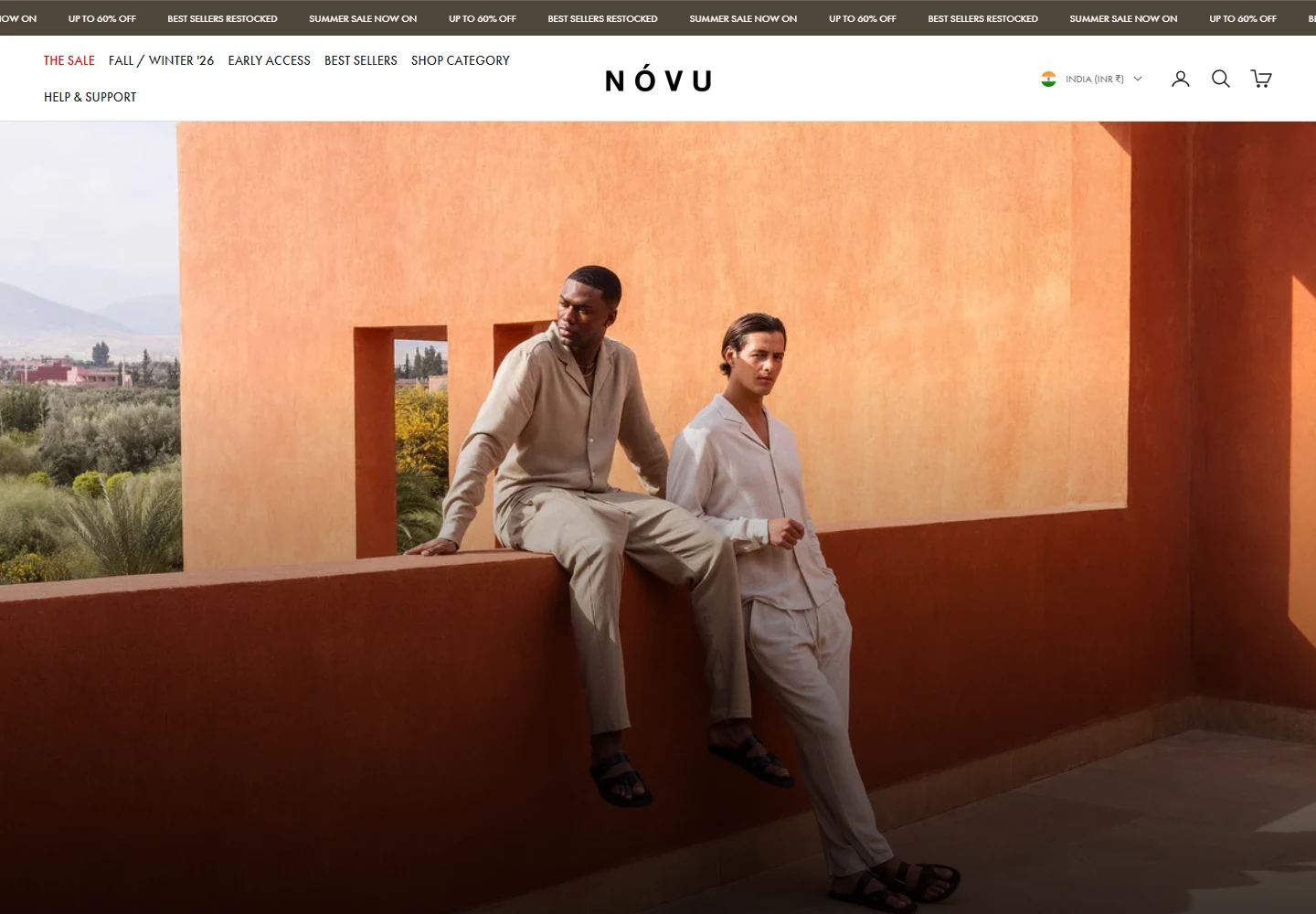
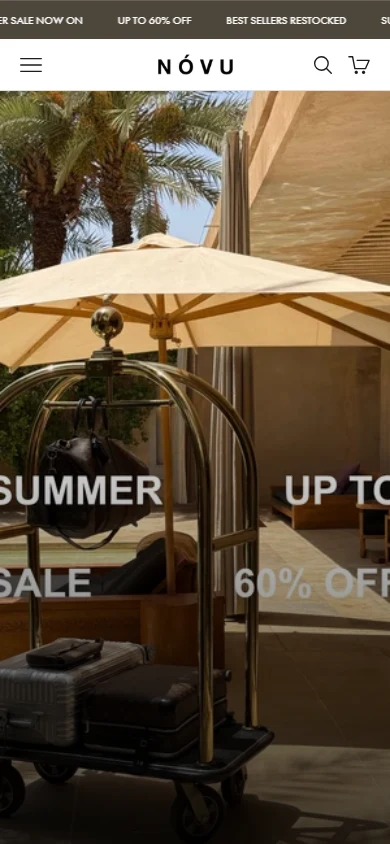
NOVU is a contemporary menswear Shopify storefront in EHUB’s portfolio. Its public experience combines seasonal fashion presentation with category and collection navigation, including a UK/GBP selection. The store gives campaign-led browsing and everyday product discovery complementary roles. This case study explores that customer-facing structure, the information a fashion catalogue needs and the practical requirements a merchant should define before commissioning a comparable Shopify store.
Contemporary menswear Shopify storefront
Category and curated-collection discovery
Seasonal presentation and public UK/GBP selection
THE BUSINESS NEED / THE PUBLISHED DELIVERABLE
What the project puts into practice.
Public website reviewed on 3 November 2026.
Business need
A menswear storefront needs to express its visual identity while helping a shopper move into the relevant collection and product category.
Published approach
NOVU combines seasonal fashion presentation with category navigation and curated collections. Public Shopify assets identify the current storefront platform; the review concerns visible shopping information and navigation.
Visible deliverables
Menswear categories such as T-shirts, knitwear, trousers and shirts
Curated collection routes including best sellers, linen and other ranges
A UK/GBP country-and-currency selection in the public storefront
A collection-led presentation alongside catalogue access
Published result
The published Shopify store connects seasonal brand presentation with product categories and curated collections, giving shoppers several useful routes into the range.
Questions to take into your own project
Can a shopper move from a campaign or collection into the relevant product range?
Are product options and the available market clear on a phone?
Which campaign and collection content will the merchant maintain after handover?
Connect the seasonal presentation to the catalogue
Fashion imagery can introduce a collection, but a shopper still needs a clear route into the products. NOVU’s public navigation connects its presentation with menswear categories and curated ranges. This provides a useful reference for planning how campaign content and everyday catalogue browsing work together. A comparable merchant brief should identify the collection calendar, approved photography and the content staff need to change between launches. The objective is a coherent journey from inspiration to product evaluation, with responsibilities for keeping that information current.
02
Give categories and curated collections different roles
Product categories and editorial collections help a shopper approach the same catalogue in different ways. In the reviewed storefront, categories such as shirts and trousers sit alongside curated collections. For a similar project, agree how products are grouped, how new items enter those groups and which information a customer needs before choosing an option. Reusable product and collection templates should fit representative catalogue data. Storefront screenshots support a discussion of that presentation; they do not verify stock synchronisation, fulfilment connections or every possible checkout condition.
03
Turn the Shopify reference into a merchant-owned brief
Before commissioning a comparable Shopify build, prepare sample products, options, images, market requirements and the apps already in use. Agree the editable theme sections, collection responsibilities and account ownership. A new build, a theme improvement and a platform migration should have separate deliverables and acceptance criteria. Review third-party charges and merchant handover before launch. Use our London Shopify and ecommerce guides to scope your own project with EHUB’s Delhi-based team. NOVU is a UK project reference, not evidence of a London location or a guarantee of higher sales, conversion rates or search rankings.
04
Plan the product information behind the fashion imagery
Collection imagery establishes a visual direction, while product information supports a purchase decision. A comparable fashion-store project should prepare representative garments with their sizes, materials, care details and available options before finalising product templates. Photography needs a consistent treatment across collection cards and product pages, with enough flexibility for different proportions and ranges. The NOVU reference helps frame the relationship between an editorial presentation and a usable catalogue. For a new brief, identify which details vary by product and which belong in reusable template sections so the merchant can keep them accurate.
05
Keep seasonal merchandising manageable after handover
Fashion content changes as ranges and campaigns change. Identify who will update collection membership, imagery and promotional sections, and review those tasks before launch. Reusable theme sections and a clear collection structure can give staff a consistent way to maintain the storefront without rebuilding each campaign. Agree the account ownership and support responsibilities alongside that editing workflow. A London Shopify brief can use this case study to discuss merchandising priorities, then define its own catalogue, markets, integrations and release plan. The useful lesson is to connect the creative concept with the merchant tasks that keep the store current.
TURN THE REFERENCE INTO A BRIEF
A relevant example. Your own requirements.
Use this project to discuss presentation and customer journeys, then define the features, content and integrations your business actually needs. Compare our shopify website development scope, or explore shopify developers in delhi if you are planning with our Delhi team.
This experience review uses EHUB’s portfolio captures and available public website information. Live websites can change. No project dates, technology stack, rankings or commercial results are inferred from screenshots.