Explore APX Repairs, a UK service-website example connecting device repair categories, booking information, repair tracking and customer contact routes.
APX Repairs, also presented as Arora Phone Xperts, is a Sleaford, UK repair business in EHUB’s portfolio. Its public website brings together repair services, phone sales, trade-in information and accessories. These related offers need distinct customer journeys: finding a relevant repair, starting a booking, checking an existing repair and exploring retail products. The case study examines how the published website organises those tasks and the practical decisions a service business can take into its own development brief.
UK repair-services business in Sleaford
Distinct service, booking, tracking and contact routes
Public desktop and mobile portfolio references
THE BUSINESS NEED / THE PUBLISHED DELIVERABLE
What the project puts into practice.
Public website reviewed on 3 November 2026.
Business need
A repair customer needs to identify the relevant device or service, understand the available next steps and contact the business with useful information.
Published approach
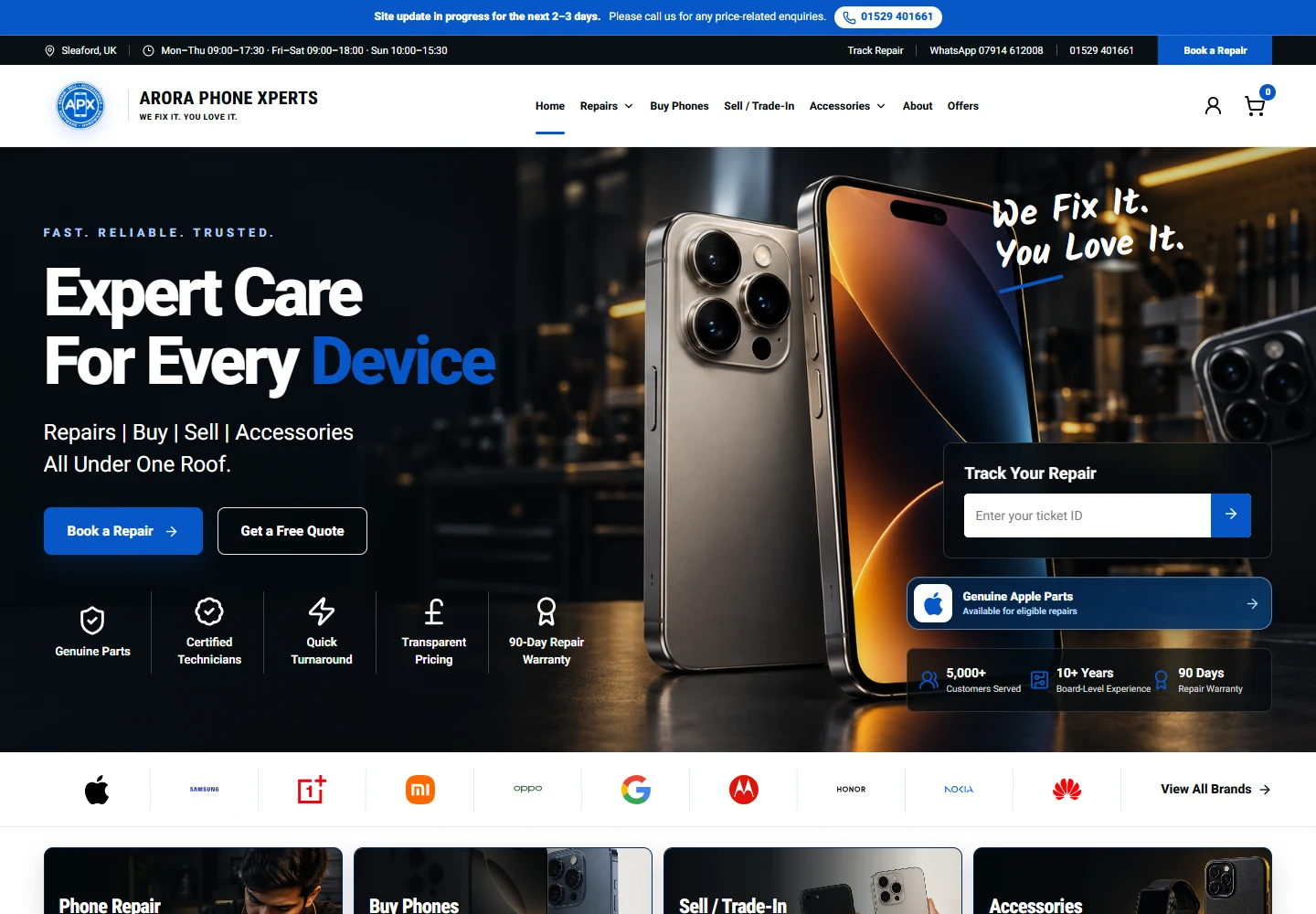
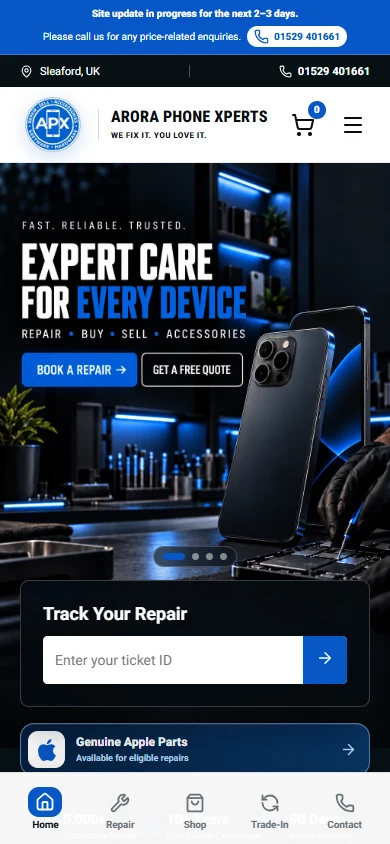
The public APX website separates repair categories from buying phones, trade-in information and accessories. Booking, repair tracking and contact routes have distinct roles in that customer journey.
Visible deliverables
Device-led repair navigation for phones, tablets, computers and other equipment
Separate entry points for repair booking, tracking and direct contact
A public location in Sleaford, UK, with business opening information
Phone sales, trade-in information and accessory browsing alongside repair services
Published result
The published service website gives repair discovery, booking information and existing-customer tracking their own routes, alongside the wider retail offer.
Questions to take into your own project
Can a new visitor find the right device category without knowing the business’s internal terminology?
Is the distinction between booking, repair tracking and an ordinary enquiry clear?
Are current prices, availability and service information owned by an authorised content editor?
Device categories make the repair journey specific
A customer with a phone problem needs a relevant entry point before sharing repair details. APX’s public repair navigation separates device groups, including phones, tablets, laptops and other equipment. That organisation gives the service pages a clearer role than a single broad list of capabilities. For a comparable website, start with the categories customers recognise, the information that changes between services and the questions staff need answered before responding. Accurate service content is part of the customer journey, not something a visual design can replace.
02
Booking, tracking and contact serve different tasks
Starting a repair and checking an existing repair are different activities. The published APX experience gives booking, repair tracking and contact their own entry points, alongside business location and opening information. This is an information-architecture observation, not a test of private repair records or backend automation. A similar brief should specify which routes are simple contact options, which depend on an external system and which require a separately scoped application. Review those distinctions on mobile and agree what customers see when a service or piece of information is unavailable.
03
A practical reference for a service-business website
The site also presents phone sales, trade-in information and accessories. Those additional activities need a hierarchy that preserves the visitor’s original task. A comparable business should identify its main enquiry routes, approve current service and price information and nominate a content owner. The handover should cover ordinary updates and the responsibilities for any connected provider. Use APX as a UK service-website reference when planning a London project with EHUB’s India-based team. Its Sleaford location is not a London-client claim, and no increase in enquiries, revenue or rankings is reported here.
04
Make each service page answer the next customer question
A device category gives a visitor a starting point; the supporting service information needs to help them continue. A comparable repair-business brief should explain the device details a customer can supply, the information staff need to assess the request and how the next step differs from a general enquiry. Location and opening information help customers understand the practical service arrangement. For a service-led website, this is a useful content principle: organise the offer around the customer’s question, then place the relevant action beside the explanation. Keep service claims and price information under the control of an authorised business editor.
05
Use the reference to define a manageable website scope
Start by listing new-customer and existing-customer tasks separately. Decide which pages explain the offer, which routes collect an enquiry and which depend on another system. Prepare representative service content before approving the navigation and templates. That makes the design review more concrete and gives the handover a clear set of ordinary editing tasks. The APX example supports this discussion through its visible service categories and customer routes. For a new London business website, EHUB can use the same planning discipline while defining the content, features and integrations around that business’s own requirements.
TURN THE REFERENCE INTO A BRIEF
A relevant example. Your own requirements.
Use this project to discuss presentation and customer journeys, then define the features, content and integrations your business actually needs. Compare our business website development scope, or explore website development in delhi if you are planning with our Delhi team.
This experience review uses EHUB’s portfolio captures and available public website information. Live websites can change. No project dates, technology stack, rankings or commercial results are inferred from screenshots.